Für statistische Zwecke und um bestmögliche Funktionalität zu bieten, speichert diese Website Cookies auf Ihrem Gerät. Das Speichern von Cookies kann in den Browser-Einstellungen deaktiviert werden. Wenn Sie die Website weiter nutzen, stimmen Sie der Verwendung von Cookies zu.
Cookie akzeptieren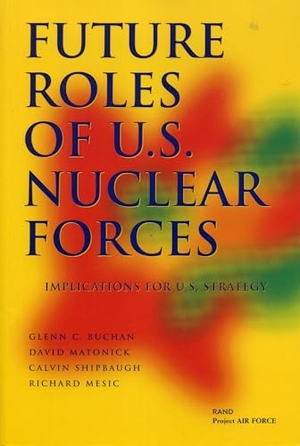
Glenn Buchan / David Matonick / Calvin Shipbaugh / Richard Mesic
Future Roles of U.S. Nuclear Forces
- RAND Corporation
- 2003
- Taschenbuch
- 152 Seiten
- ISBN 9780833029171
Since the end of the Cold War, the U.S. has reexamined its basic assumptions about foreign policy and instruments of national security policy. This study examines the possible roles of nuclear weapons in contemporary U.S. national security policy. For most foreseeable combat situations, advanced conventional weapons are probably sufficiently effective if there are enough of them and they're used properly. Nuclear weapons remain the final guarantor of U.S. security, and the U.S. might wish to retain the traditional threat of nuclear retaliation to deter threats to its national existence. At the same time, it should have the operational flexibility to in fact use a modest number
Mehr
Weniger
zzgl. Versand
Etwa 20 Tage